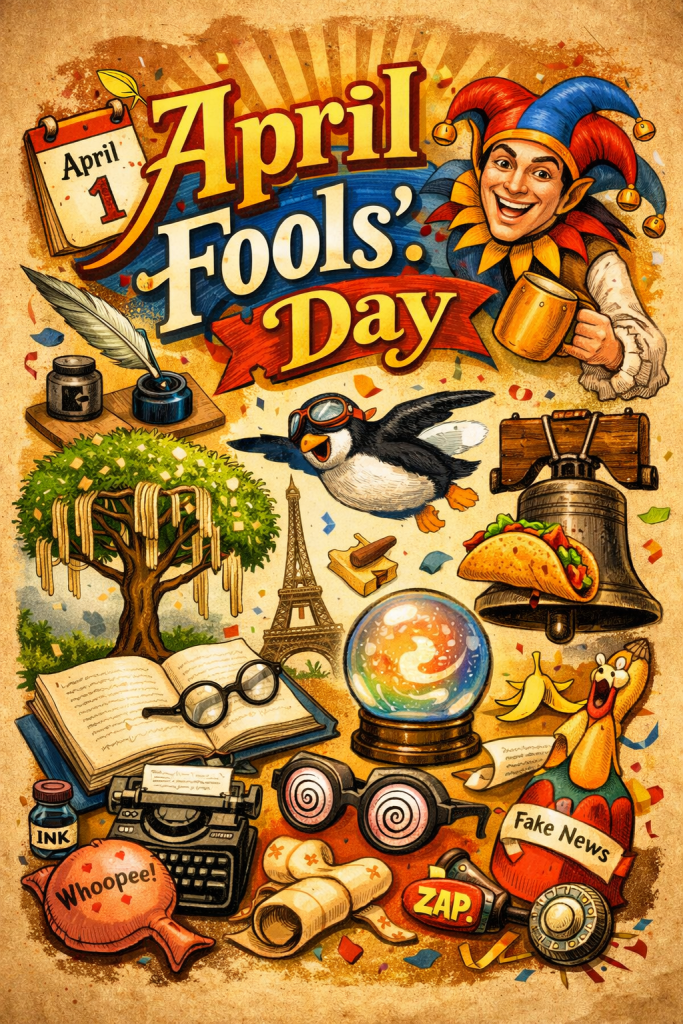
The true origin of April Fools’ Day is a bit of a puzzle—fitting for a holiday built on deception. One of the most widely accepted theories dates back to 1582, when France adopted the Gregorian calendar. The new system moved New Year’s Day from late March (around April 1st) to January 1st. Those who either didn’t hear about the change—or refused to accept it—became the target of jokes and pranks. They were dubbed “April fools.”
Other historians trace the tradition even further back to ancient spring festivals. Celebrations like the Roman Hilaria and medieval Europe’s Feast of Fools encouraged disguises, role reversals, and playful chaos—mirroring the spirit of April Fools’ Day today. Even literature may hold clues. In The Canterbury Tales, Geoffrey Chaucer included a tale involving trickery tied to a date near April 1st—suggesting that the love of a good prank has deep cultural roots.
Legendary April Fools’ Pranks That Fooled the World
📺 The Spaghetti Tree Hoax (1957)

In one of the most famous pranks of all time, the BBC aired a serious news segment showing Swiss farmers harvesting spaghetti from trees. Thousands of viewers believed it—and even asked how they could grow their own spaghetti at home.
🌮 Taco Liberty Bell (1996)
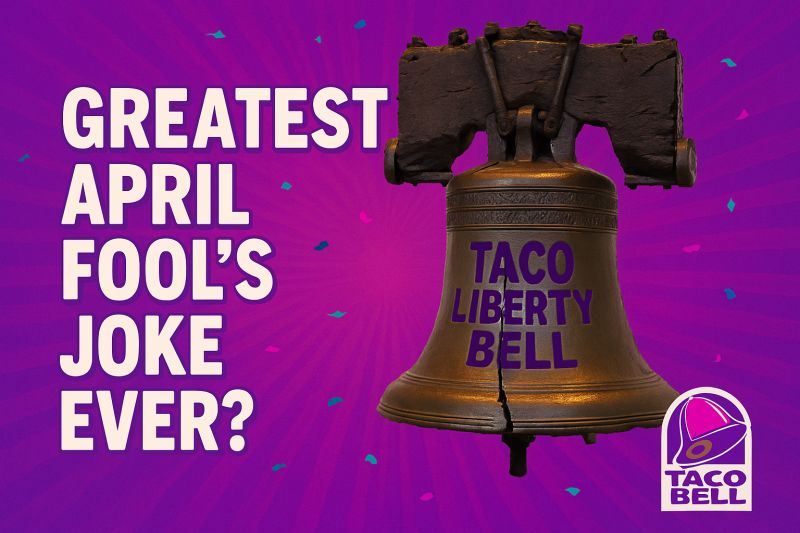
Taco Bell ran a full-page ad claiming it had purchased the Liberty Bell and renamed it the “Taco Liberty Bell.” Outrage spread quickly—until the company revealed it was all a joke.But apparently it got them $25 million in advertising dollars.
✍️ What April Fools’ Day Teaches Us About Writing
Even in the digital age, April Fools’ Day has continued to thrive. In 2000, Google introduced “MentalPlex,” a fake feature that claimed users could search the internet using only their minds. Despite sounding absurd, many people still gave it a try, illustrating how easily curiosity and presentation can override skepticism. These pranks succeed not because people are gullible, but because they are built like good stories—anchored in just enough truth to make the impossible feel plausible.
And that is where April Fools’ Day connects directly to writing. At its core, every successful prank relies on the same principles that make a story compelling. It begins with a strong hook—something intriguing enough to capture attention immediately. It builds credibility through detail and tone, creating a sense of trust that encourages the audience to suspend disbelief. And most importantly, it evokes emotion, whether that’s surprise, amusement, confusion, or even outrage. The audience doesn’t just observe the prank—they experience it.
Writers do the exact same thing, just with a different intention. Instead of revealing a joke, they guide readers through a narrative that feels real, immersive, and meaningful. Whether you’re writing a memoir, a business book, or a novel, your goal is to draw the reader in so completely that they willingly step into your version of reality. The best stories, like the best pranks, live in that delicate balance between truth and imagination.
April Fools’ Day ultimately reminds us that people want to believe a good story. They want to be surprised, entertained, and emotionally engaged. In a world filled with constant information, it’s not just facts that capture attention—it’s the way those facts are presented. A clever narrative can travel faster, stick longer, and resonate deeper than anything else.
So while April 1st may be known for jokes and hoaxes, it also quietly celebrates something far more powerful: the art of storytelling. Because if a well-crafted prank can convince millions that spaghetti grows on trees, imagine what a well-written book can do when it tells a story that truly matters.

 Richter Publishing