
As writers, we understand the weight of narrative. Stories shape memory, identity, and even entire nations. Few days in the American calendar demonstrate this as clearly as Columbus Day.
The Original Narrative
When Columbus Day was first celebrated in 1792, the story was simple: a bold Italian explorer, sailing under the Spanish crown, “discovered” a new world. This framing became a foundation for mythmaking—Columbus as a symbol of courage, exploration, and possibility.
For many Italian-American communities, the holiday became a cultural anchor, affirming their place in a country that often marginalized them. When Franklin D. Roosevelt made it a national observance in 1937, it was not only about honoring Columbus but also about validating the story of immigrants as contributors to the American tapestry.
The Counter-Narrative
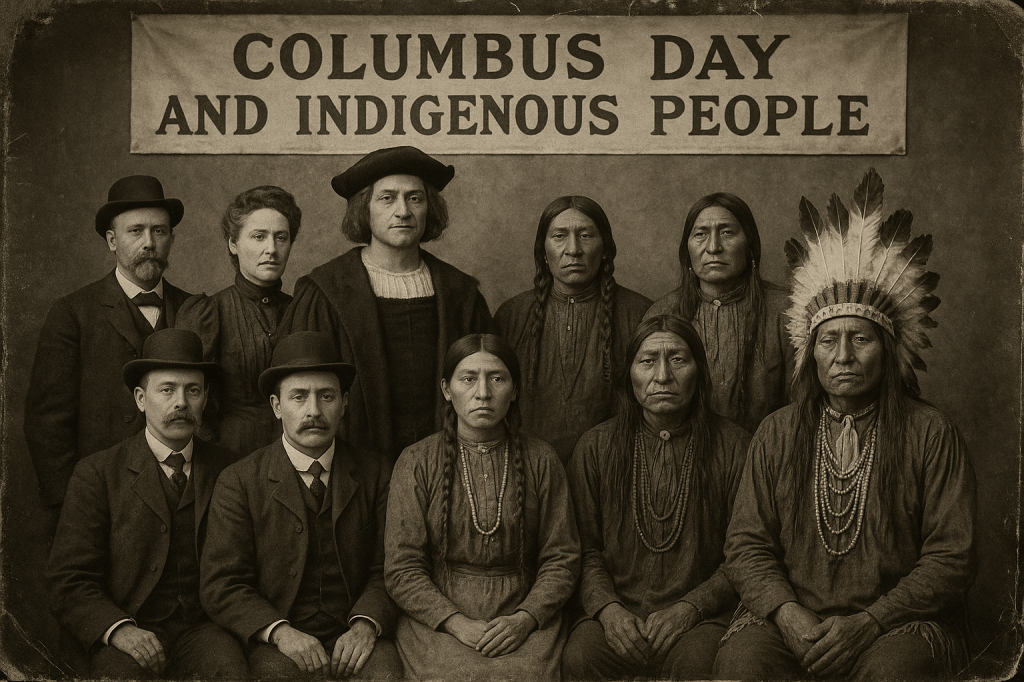
But stories evolve. Historians and Indigenous voices have long reminded us that Columbus’s voyages also marked the beginning of colonization, violence, and the destruction of Indigenous communities. The same story of “discovery” can also be read as a story of loss.
In recent decades, cities and states have shifted toward Indigenous Peoples’ Day, rewriting the cultural script to recognize voices that had been pushed to the margins. Writers can see this as an act of reframing—a reminder that every story has perspectives left untold.
Lessons for Authors
- Narratives Change Over Time
What was once celebrated without question is now reassessed. As authors, we must recognize that our work will be read differently by future generations. Stories live, breathe, and transform. - Whose Voice Is Missing?
Just as Columbus Day has shifted focus toward Indigenous perspectives, our writing should ask: whose voices are absent from this narrative? How do we bring them forward with respect and authenticity? - The Power of Myth and Symbolism
Columbus Day demonstrates how societies build myths around figures. Writers can learn from this—whether to construct mythologies in fiction or to deconstruct them in essays, memoirs, or historical works. - Writing With Responsibility
Every story we tell has consequences. Just as the narrative of Columbus shaped centuries of perception, our words carry influence. Writers have the privilege—and duty—to handle history and humanity with care.
A Final Reflection
Columbus Day is no longer just about a man and his voyage; it is about the story we choose to tell as a culture. As authors, we stand at the intersection of memory and imagination, where we can preserve, challenge, and reshape narratives to tell the whole story.
This holiday, perhaps the most meaningful act we can take is to write with awareness: to acknowledge complexity, to honor silenced voices, and to remind readers that every history is, at its core, a story—one we must strive to tell fully and truthfully.

 Richter Publishing