Artificial intelligence is changing the publishing industry at an incredible pace. From writing manuscripts to generating illustrations, AI tools have made it easier than ever to produce something that resembles a finished book. But just because technology makes something possible doesn’t mean it should replace the creativity, dedication, and talent that go into creating a genuine work of art.
At Richter Publishing, we’ve spent years working with authors, editors, illustrators, and creative professionals who pour their hearts into their work. Unfortunately, we’re seeing a growing number of manuscripts submitted that appear to be generated almost entirely by artificial intelligence. These submissions often lack originality, authentic storytelling, emotional depth, and the unique voice that makes an author’s work worth reading. This growing flood of low-quality, mass-produced AI content has earned a fitting nickname: AI slop.
And frankly, it’s becoming a serious problem in the publishing industry.
Writing a Book Should Require More Than Typing a Prompt
There’s a troubling misconception, particularly among some aspiring younger authors, that writing a book is as simple as telling ChatGPT to generate a story, copying the results into a document, and calling yourself an author. While AI can certainly produce thousands of words in minutes, generating text is not the same as creating literature.
Real writing takes imagination, research, personal experience, critical thinking, revisions, and dedication. An author’s unique perspective is what transforms words on a page into a story that resonates with readers. AI cannot replace the lived experiences, emotions, and creative instincts that make human storytelling meaningful.
We’re not against technology. In fact, AI can be an incredibly useful assistant for brainstorming, organizing ideas, correcting grammar, improving sentence structure, and identifying areas that need further development. But there’s a significant difference between using AI to strengthen your own writing and asking it to do all the creative work for you.
If AI wrote your entire book, how much of that book can you genuinely claim as your own creative accomplishment?
AI-Generated Illustrations: What About the Real Artists?
The same concerns extend to book illustrations, particularly children’s books. We’re increasingly seeing projects where every illustration has been generated by AI rather than created by an actual artist. With a few prompts, someone can produce an entire collection of images without ever picking up a pencil, paintbrush, or digital drawing tablet.
Consider the talented illustrators who spend years developing their skills, studying composition, mastering color theory, and creating original characters. Their artwork reflects countless hours of practice, artistic decisions, and personal expression. Replacing that craftsmanship entirely with AI-generated images while presenting the results as original human illustration diminishes the value of genuine artistic talent.
As a publisher, I find that deeply disappointing. Having a background in graphic design myself, I understand the time, education, and dedication involved in developing artistic skills. Technology should support creative professionals, not encourage people to disregard the work and expertise of real artists. AI-generated images can have legitimate uses, but authors should be transparent about how their illustrations were created and understand the legal limitations associated with them.
The Copyright Problem Authors Need to Understand
Here’s something many aspiring authors don’t realize: Just because you can publish an AI-generated book doesn’t mean you can copyright everything in it. So what can you copyright and claim as yours?
According to the United States Copyright Office, copyright protection requires human authorship. If someone uses ChatGPT or another AI platform to generate an entire manuscript without meaningful human creative contributions, the AI-generated writing generally does not qualify for copyright protection. The same applies to illustrations created entirely by artificial intelligence. Purely AI-generated images generally cannot be copyrighted on their own, even if the person using the software spent time developing prompts. Consequently, purely AI-generated images generally cannot be claimed as someone’s original copyrighted artwork, and others may legally reproduce or use those images without infringing copyright in the AI-generated material itself.
However, authors who write their own manuscripts and use AI for proofreading, grammar corrections, or editorial assistance can still protect their original writing. Similarly, substantial human creative modifications to AI-generated material may qualify for copyright protection, but only for the qualifying human contributions.
The Copyright Office also requires applicants to disclose and exclude substantial AI-generated material from their copyright claims. There is no magic percentage of human editing that automatically makes an AI-generated manuscript copyrightable. In other words, AI can assist with creating a book, but it cannot replace the human authorship required for copyright protection.
For more information, review the official U.S. Copyright Office guidance on AI-generated material and its 2025 report on AI and copyrightability.
The Publishing Industry Doesn’t Need More Content. It Needs Better Content.
Publishing a book should mean something. It’s an accomplishment that represents an author’s creativity, determination, and willingness to invest time in developing their craft. When someone bypasses that entire process and relies on AI to generate a manuscript and illustrations, the result may look like a book, but it often lacks the substance and originality that make books valuable.
Readers deserve authentic stories. They deserve characters with depth, meaningful messages, and illustrations created with intention. They deserve more than generic, repetitive content assembled by an algorithm. Also all publishing platforms now require you to check a box if anything within your book was generated using AI. There are varying levels you can check. In order to let readers know if some of the content was created utilizing AI software or maybe just portions of it.
This doesn’t mean every author needs to be a professional writer or illustrator before beginning their publishing journey. Everyone starts somewhere. Writing and artistic skills are developed through practice, mistakes, feedback, and perseverance. That’s part of the creative process, and it’s something to be proud of. But allowing AI to do everything for you means missing the opportunity to discover and develop your own talents.
Our Position at Richter Publishing
At Richter Publishing, we believe technology should enhance human creativity, not replace it. We support authors who use AI responsibly as an assistant to improve their work, but we strongly encourage originality, transparency, and genuine creative involvement in every project.
Authors submitting manuscripts should understand the distinction between AI-assisted editing and AI-generated authorship. They should also be upfront about whether AI was used to generate substantial portions of their writing or illustrations. Every manuscript deserves careful evaluation, and we reserve the right to decline projects that do not align with our publishing standards and commitment to authentic creative work. Our goal has never been to publish as many books as possible. It’s to publish work that has meaning, originality, and value. We will not accept manuscripts of they look like it had been created heavily with AI writing tools or graphics.
Don’t Let Artificial Intelligence Replace Your Own Intelligence
Perhaps the greatest concern isn’t what AI can create. It’s what happens when people stop challenging themselves to create anything at all. Your imagination is uniquely yours. Your experiences, perspectives, ideas, and emotions cannot be duplicated by a machine. Those qualities are what make you an individual, an artist, and an author.
Use AI to research. Use it to brainstorm. Use it to help organize your thoughts, refine your grammar, or overcome writer’s block. But don’t surrender your entire creative process to technology simply because it’s faster or easier. Write your own stories. Develop your own ideas. Support real illustrators and artists. Take pride in the work you create.
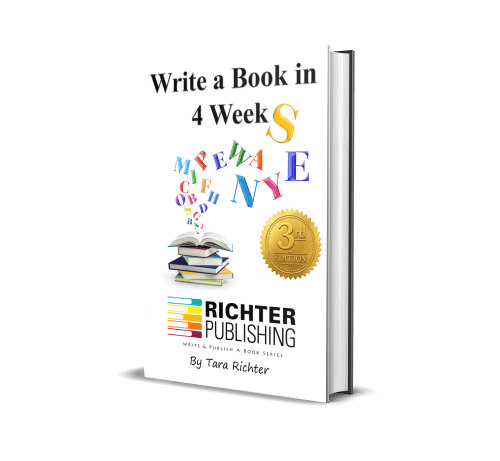
Because the world doesn’t need another thousand books generated in seconds by artificial intelligence. It needs authentic voices, original ideas, and people willing to put genuine effort into their craft. AI should be your assistant, not your replacement. Your creativity is still your greatest asset. Don’t lose it. Get our new book updated with the ever changing technology in the publishing world, How to Write a Book in 4 Weeks. I wrote and published the first version way before the use of AI. And yes, even then I could still write a full length book without the AI assistance! Just brain power.


