
Few dates on the calendar carry the same eerie reputation as Friday the 13th. For centuries, people have associated it with bad luck, misfortune, and mysterious events. Hotels skip the 13th floor, airlines avoid row 13, and some people refuse to travel or make major decisions on this day. But where did this superstition actually come from? The story is a fascinating mix of ancient mythology, religious symbolism, medieval history, and modern pop culture.
The Unlucky Number 13
The superstition surrounding Friday the 13th begins with the number 13 itself, which has been viewed as unlucky in many cultures for thousands of years.
In ancient numerology, the number 12 was often seen as a symbol of completeness or perfection. Consider how frequently it appears in cultural systems:
- 12 months in a year
- 12 zodiac signs
- 12 Olympian gods in Greek mythology
- 12 tribes of Israel
- 12 apostles in Christianity
Because 12 represented order and harmony, the number 13 was seen as disrupting that balance. Anything that came after a perfect system was viewed as chaotic or dangerous.
Norse Mythology and the First “13th Guest”
One of the earliest stories linking the number 13 to bad luck comes from Norse mythology. According to legend, the gods gathered for a banquet in Valhalla. There were 12 gods present, enjoying a peaceful feast. However, the mischievous trickster god Loki arrived uninvited as the 13th guest.
Loki tricked the blind god Hodr into shooting an arrow that killed Balder, the beloved god of light and joy. Balder’s death plunged the world into darkness and mourning. From this story came the belief that having 13 guests at a table brings misfortune.
Christianity and the Last Supper
Another powerful influence on the superstition comes from Christian tradition. At the Last Supper, there were 13 people at the table: Jesus and his twelve apostles. One of those apostles, Judas Iscariot, betrayed Jesus. The following day — Friday — Jesus was crucified. Because of this connection, both the number 13 and the day Friday gradually gained ominous associations in Western culture.
Medieval Fear of Friday
Even before Friday the 13th became a combined superstition, Friday alone already carried negative symbolism in parts of Europe.
Some medieval beliefs claimed that:
- Eve offered Adam the forbidden fruit on a Friday
- The Great Flood began on a Friday
- Jesus was crucified on a Friday
As a result, many people believed Friday was an unlucky day to begin journeys, conduct business, or hold weddings.
The Knights Templar and Friday the 13th
One of the most famous historical events tied to the superstition occurred on Friday, October 13, 1307. On that day, King Philip IV of France ordered the arrest of hundreds of members of the Knights Templar, a powerful medieval religious military order. The knights were accused of heresy and corruption, and many were tortured or executed. While historians debate whether this event truly created the superstition, it certainly reinforced the association between Friday the 13th and disaster.
The Birth of the Modern Superstition
Interestingly, widespread fear of Friday the 13th is relatively modern. The idea became popular in the 19th and early 20th centuries. In 1907, a novel titled Friday the Thirteenth by Thomas W. Lawson told the story of a stock market crash deliberately triggered on that unlucky date. The book helped cement the superstition in public imagination. Over time, newspapers, folklore, and pop culture continued to amplify the idea that the date carried mysterious bad luck.
From Superstition to Pop Culture: The Jason Era
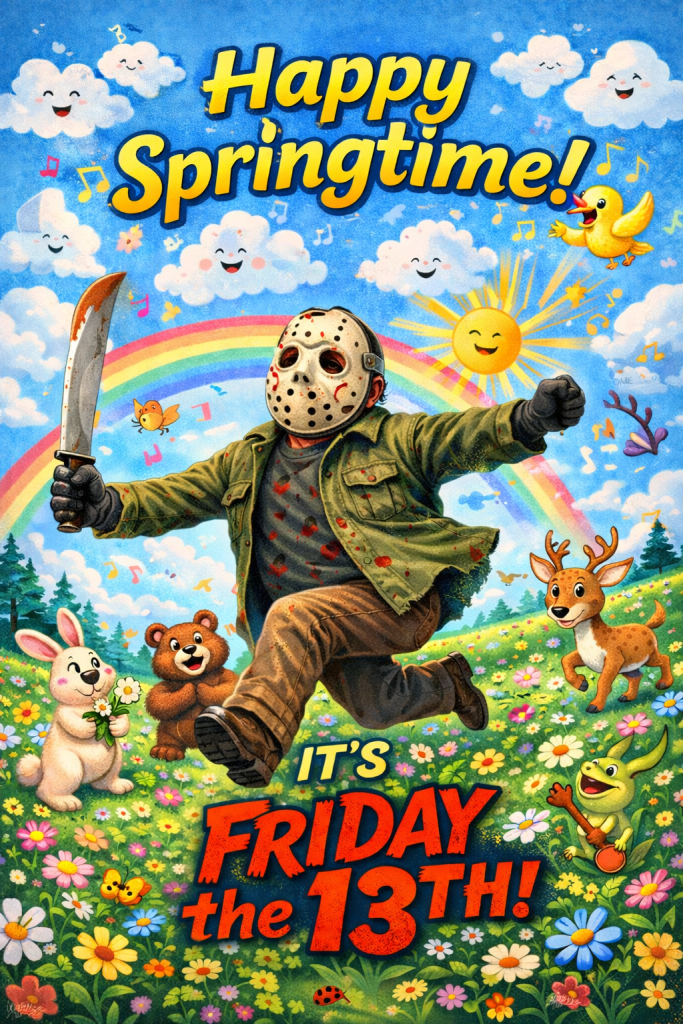
In 1980, the superstition took a dramatic turn with the release of the horror film Friday the 13th, which introduced audiences to the now-legendary character Jason Voorhees. Although Jason did not appear as the main killer until later in the franchise, his hockey mask, machete, and relentless presence at Camp Crystal Lake turned the date into a global horror phenomenon.
The film series became one of the most successful horror franchises in history and transformed Friday the 13th into something new:a day celebrated by horror fans, movie marathons, and spooky storytelling. Today, when people think of Friday the 13th, many picture Jason emerging from the woods rather than ancient mythology.
A Superstition That Still Lingers
Even in the modern world, the fear of Friday the 13th — known as paraskevidekatriaphobia — still influences behavior. Studies estimate that millions of people alter their plans on this date. Some avoid flying, signing contracts, or making major decisions. In fact, economists have estimated that the superstition can cost businesses hundreds of millions of dollars in lost travel and commerce. Yet for others, the date has become a celebration of mystery and fun rather than fear.
The Legend Lives On
Whether rooted in ancient myths, religious symbolism, medieval politics, or Hollywood horror, Friday the 13th has become one of the most recognizable superstitions in the world. It is a rare cultural phenomenon where history, folklore, and film all collide.
So when the calendar lands on Friday the 13th again, you might ask yourself: Is it really unlucky… Or just a great excuse to watch a Jason movie and stay out of the woods?

 Richter Publishing